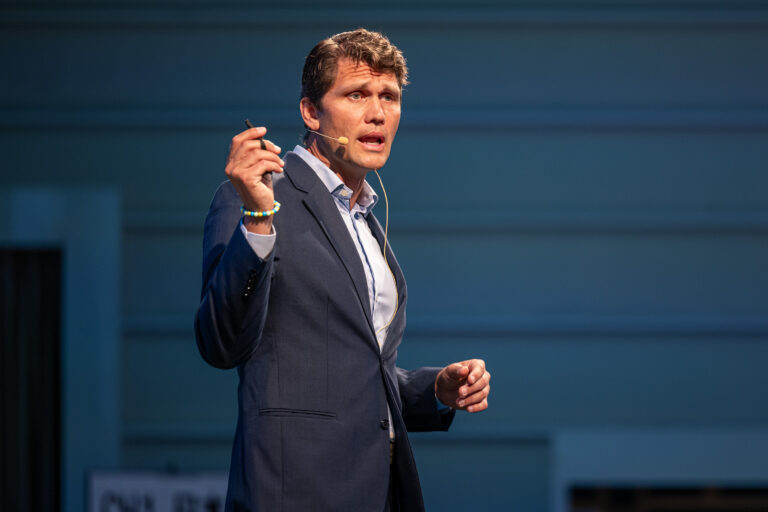
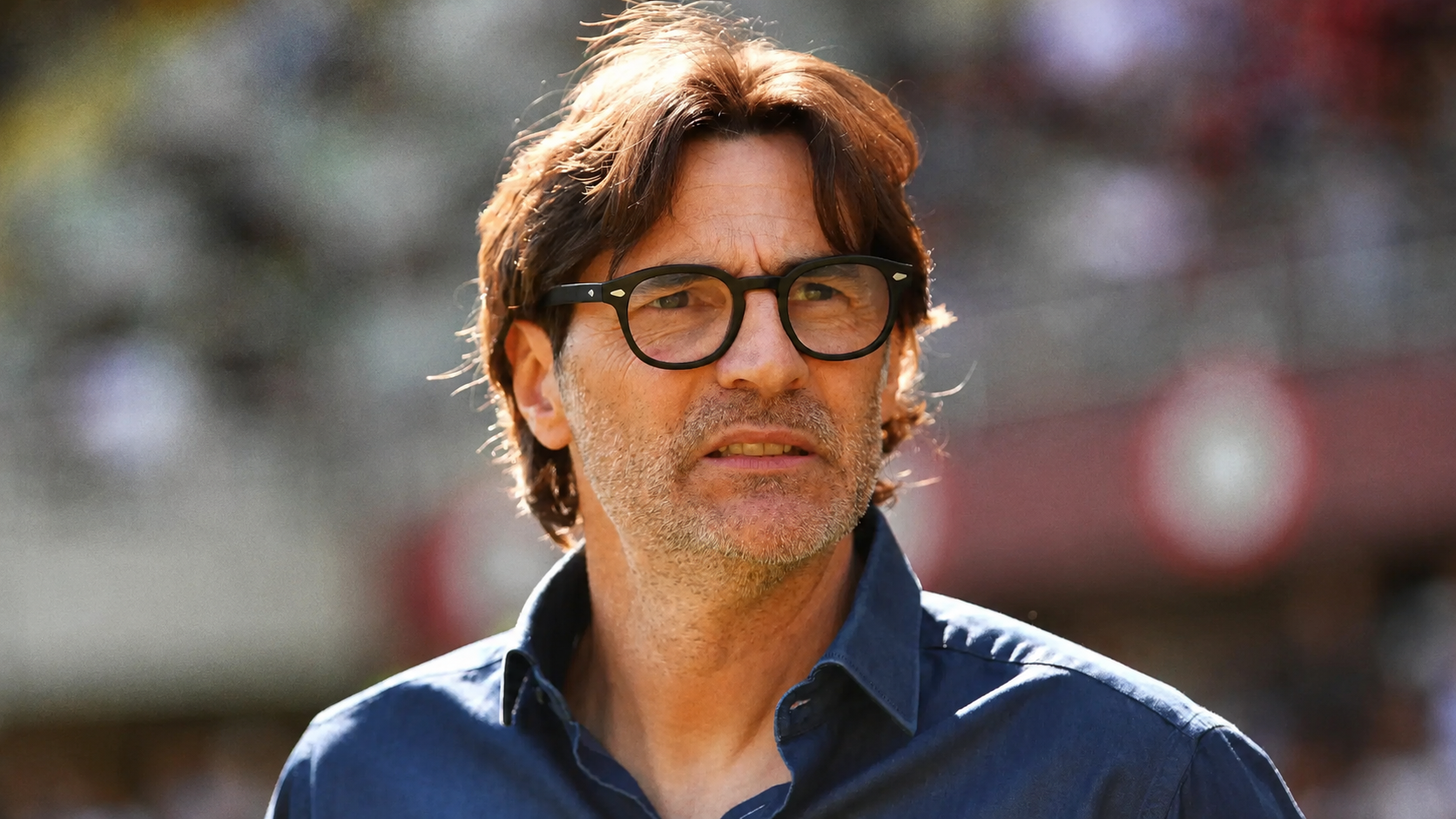


The Hard Way, Paolo Vanoli did what seemed impossible.
On the evening of May 10, 2026, Paolo Vanoli walked into the post-match press room at the Artemio Franchi wearing a T-shirt bearing the face of a dead man.
The match had just ended — a goalless draw against Genoa, enough to confirm Fiorentina‘s survival in Serie A by the narrowest of margins. Whistles were still echoing from the stands. The man on Vanoli’s shirt was Rocco Commisso, the club’s late president, who had died in January at 76 after months of illness in the United States. Vanoli had barely known him. He had arrived at the club in November, weeks after Commisso had last set foot in Florence. “This is for him,” Vanoli said, his voice measured, almost deliberately calm. “He and his family gave everything to this city. I wanted this for the fans, and I wanted it for him.” What Vanoli had just achieved had no precedent in Italian football.
No team in Serie A history had ever survived relegation after winning zero of its first eleven matches. Fiorentina had done precisely that — five draws and six defeats before he arrived, a dressing room in open revolt, the sporting director had already resigned, a fanbase that had published a formal statement directly attacking the ownership and the president — while making clear their support for the team itself had not wavered. Vanoli took the job anyway, refusing Genoa’s offer. According to SpaceViola.com — our outlet dedicated to following Fiorentina — he did so for a salary well below the Serie A standard for a head coach, agreeing to cover part of his own staff costs. “I know what Florence means,” he said at his unveiling. “I played here. Difficult situations give me energy.”
Three Finals, Three Goals
Vanoli was born in Varese in 1972 and grew up playing in the oratory of Solbiate, a small town in the province of Como — the kind of place that produces footballers through stubbornness rather than talent scouts. He was a left-sided centre back with a strong positional sense, not blessed with pace but possessed of an intelligence that let him compensate. He made his professional debut with Venezia in 1993 and spent a decade rotating through the mid-table geography of Italian football: Verona, Fiorentina, Bologna, Vicenza, Rangers Glasgow. Two caps for the national team, scoring on his debut against Belgium in 1999. None of this would distinguish him from a thousand other journeymen. What did was a single, extraordinary season at Parma. In the spring of 1999, Parma were among the finest club sides in Europe — a project of peculiar ambition built on Juventus cast-offs and visionary recruitment, held together by a sporting culture that is now practically extinct. On May 5, playing against Fiorentina in the Coppa Italia final at the Artemio Franchi — the very ground where he would later engineer an improbable survival — he scored the equalizer that would eventually win Parma the trophy. Seven days later, at the Luzhniki Stadium in Moscow, before 62,000 spectators, he headed in Parma’s second goal in a 3-0 dismantling of Olympique de Marseille to win the UEFA Cup. Parma added the Supercoppa Italiana in August. Three trophies. One season. Two final goals.
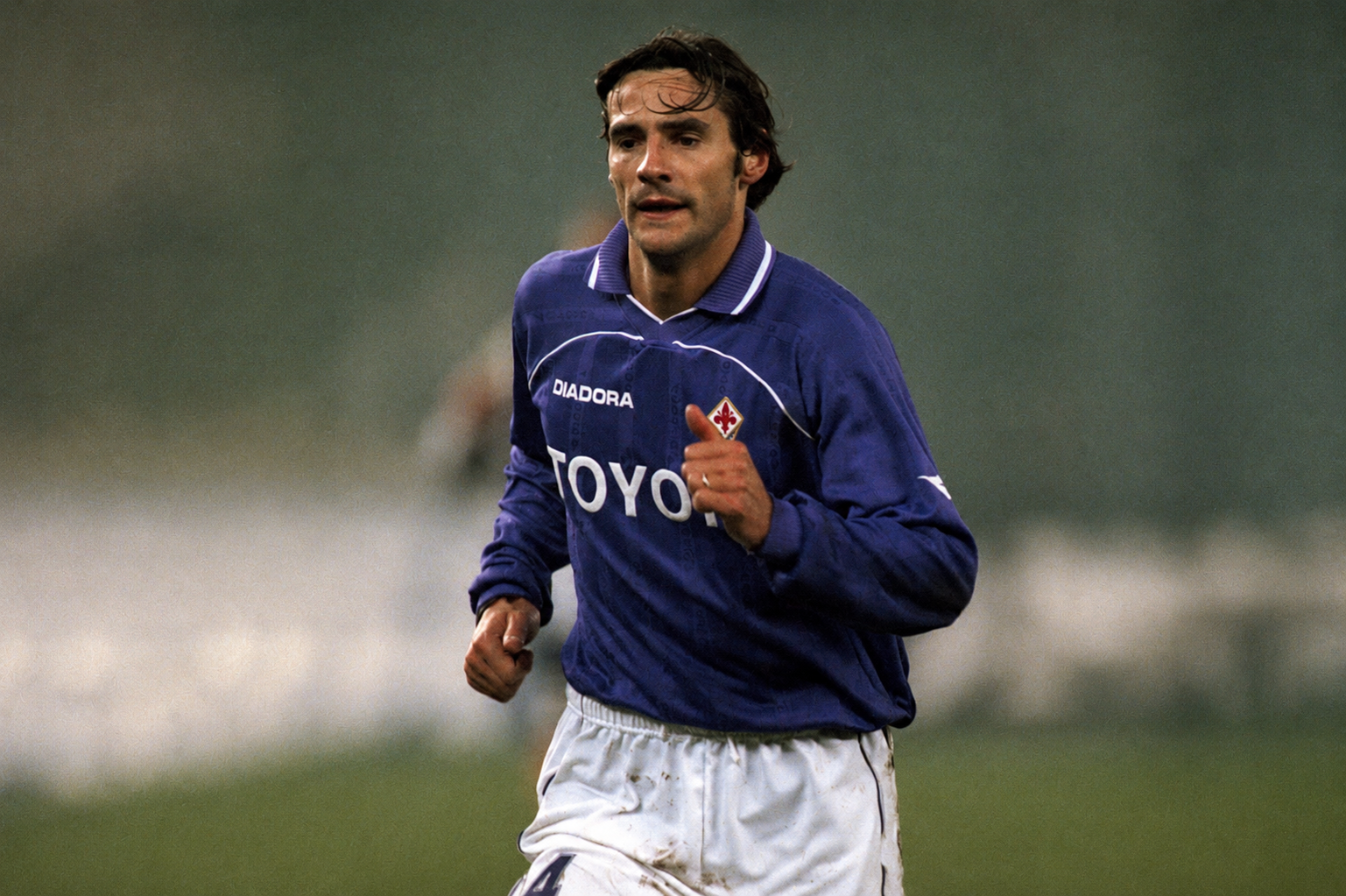
Then, in 2001, having moved to Fiorentina, he scored in a Coppa Italia final again — this time against Parma, his former club. Three consecutive cup finals. Three goals. He retired in 2007 with 135 Serie A appearances.
The Apprenticeship
The coaching career began in the Italian fourth division. Vanoli took charge of Domegliara, a club in the Verona hinterland that had never risen above the amateur ranks, and guided them from the Eccellenza into Serie D — the national fourth tier — for the first time in the club’s history. The Italian Football Federation noticed. In 2010, Vanoli joined the national youth system, working across the Under-16, Under-17, Under-18, and Under-19 setups under Arrigo Sacchi, the architect of the most influential Italian football philosophy of the modern era. Seven years in that environment — not a brief spell, but a sustained formation. He became head coach of the Under-19 side in 2015 before stepping up to assist Gian Piero Ventura with the senior national team in 2016.
When Italy failed to qualify for the 2018 World Cup — beaten in a playoff by Sweden, eliminated for the first time since 1958 — Vanoli submitted his resignation alongside Ventura.
Sacchi, asked to assess Vanoli before his appointment at Torino, spoke with the precision of someone who had watched him closely for years. “He listens,” Sacchi told La Gazzetta dello Sport. “He’s not arrogant. He works incredibly hard on the training pitch. And he was a real footballer — the dressing room holds no mysteries for him.”
The Education of Antonio Conte
In July 2017, Antonio Conte called. Not to offer him a head coaching job — but something arguably more valuable: a seat in the inner sanctum of the most intense tactical mind in world football. Vanoli joined Conte’s staff at Chelsea, arriving after the Premier League title had already been won in the previous campaign. What he was present for was the 2017-18 FA Cup triumph, and then — after Conte departed Stamford Bridge — the entire Inter Milan journey that culminated in the 2020-21 Serie A title, the club’s first in eleven years. Four years in total. Two clubs. Two trophies. An education he has described with the precision of someone who knows it changed him.
“If you pay attention, you learn the detail,” he said during his time at Torino. “The work, the perfectionism, the resilience. His greatest ability is making a team strong, humble, and resilient — beyond any tactical consideration.” Then, with the candour that has become his trademark: “We’re the same star sign. Two lions. Sometimes we clashed — and it made me better.”
/www.violanews.com/assets/uploads/202510/51a9ac7b394ec833e9ee12e4ce796316-scaled.jpg)
At Chelsea, he was transfixed by Cesc Fàbregas. The Spanish midfielder, a Champions League winner and World Cup champion, was at that point barely featuring for the club. He could have eased off. He did the opposite. “Every single training session, despite being Fàbregas, he tried to prove the manager wrong.” Vanoli recalled. “Conte never left him out again, I still show my midfielders videos of how he moved — how he was always scanning, always looking for the vertical pass.” It is the Vanoli philosophy compressed into a single anecdote: reputation means nothing without daily proof.
In November 2021, Conte called again. He was heading to Tottenham Hotspur and wanted Vanoli beside him. Vanoli said no. He wanted his own dugout. His own project. “It was a painful decision,” he would later admit. “The coincidence was that just as he was signing for Tottenham, I was receiving the call from Russia.” Within weeks he had taken charge of Spartak Moscow, winning the Russian Cup in May 2022 before the invasion of Ukraine forced the club to part ways with all foreign staff.
Venice and the Making of a Manager
Vanoli arrived at Venezia in November 2022, replacing Igor Javorčič with the club sliding toward the lower reaches of Serie B. By the end of the following season, Venezia had been promoted to Serie A through the playoffs, defeating Cremonese in the decisive tie. The style was unmistakable: a 3-5-2 with high pressing coordinated from the front line, a deep-lying playmaker positioned between the lines to disrupt opposition midfields, aggressive man-marking from central defenders, and immediate counter-pressing on every loss of possession. Physically punishing, technically exacting, and entirely coherent.
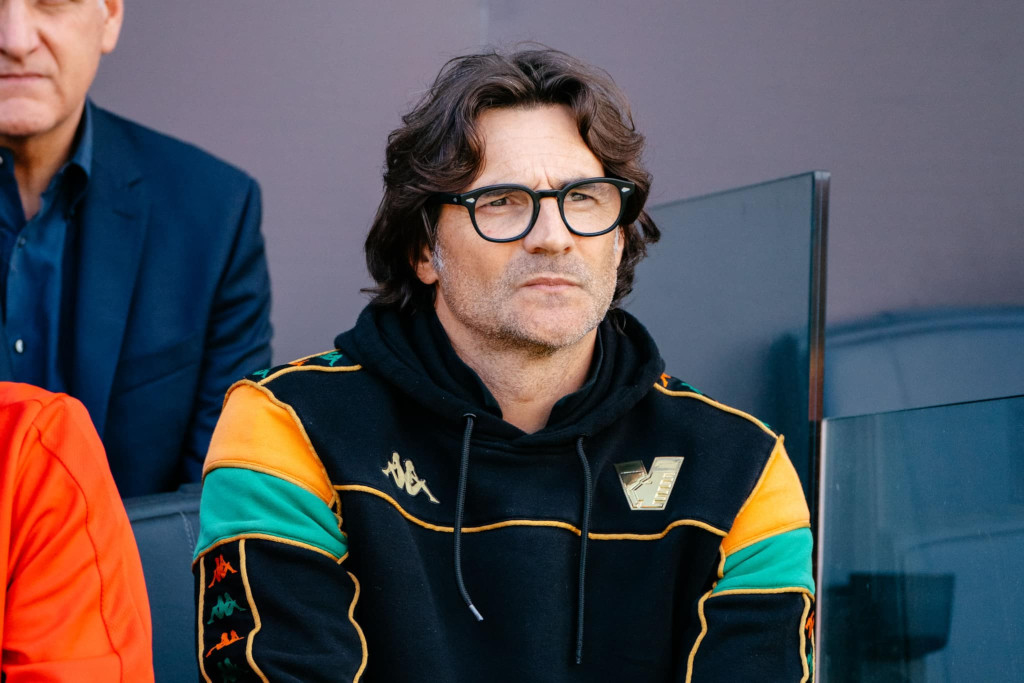
“You win with the group,” Vanoli said, invoking a story that has since become part of his mythology. “I showed my players a photo of Verón and Simeone. Verón said: ‘Off the pitch we hated each other, but if anyone touched one of my teammates, we’d kill them.’ I don’t care if you’re friends outside. When you come here, we’re a team.” He also spoke — with refreshing frankness — about the limitations of modern footballers. “If I could add one person to my backroom staff, I’d add a psychologist. These players are more fragile than they used to be. Society has completely changed. I need someone to help me understand them better, to get more from them.”
Turin: A Dream Interrupted
The summer of 2024 brought the Torino job. His first act was to visit the Superga hillside, where eighteen members of the Grande Torino squad died in a plane crash in 1949. “I got goosebumps,” he said. “I stood there with my mouth open.” It was not a performance. It was the gesture of a man who understood what he was taking on.
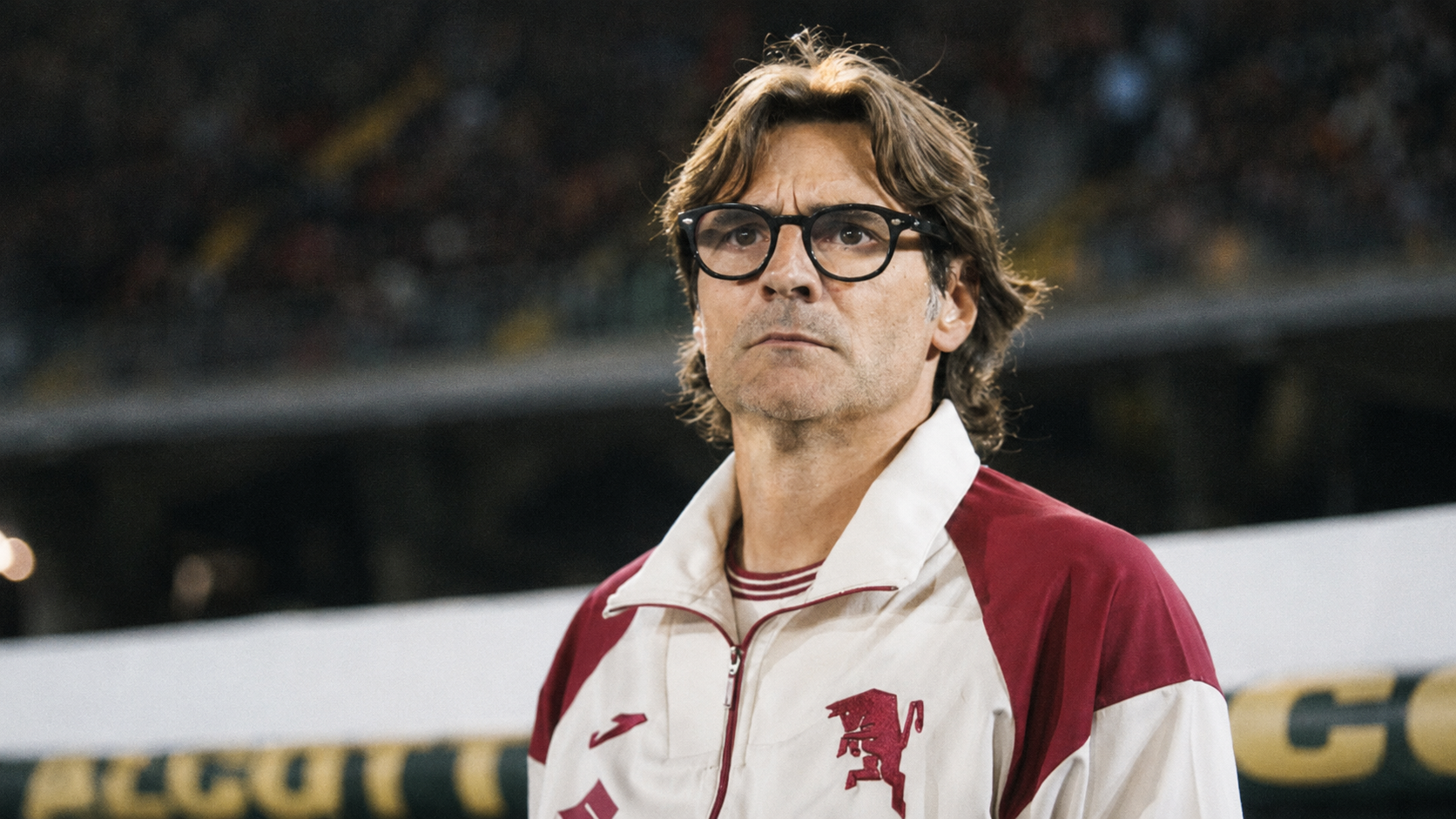
What he was taking on included a squad with insufficient depth, an ownership under sustained fan pressure for years, and a centre-forward — Duvan Zapata, the team’s most important player — who suffered a devastating knee injury before the season was three months old. The board did not adequately replace him. The season closed in eleventh place. On June 5, 2025, Vanoli was dismissed. Five months passed before the phone rang again.
Florence: A Season Inside a Storm
The call came from Florence on November 7, 2025. Fiorentina had just sacked Stefano Pioli after
ten Serie A matches without a win. The sporting director, Daniele Pradè, had already resigned days earlier. What Vanoli was walking into was, by any measure, one of the most diff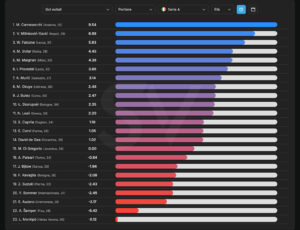 icult environments in European football that autumn. SpaceViola.com, our outlet dedicated to following Fiorentina, reported that the squad’s fractures ran deep enough to affect daily life at the training ground — players eating in separate groups at different times, the ordinary rituals of collective sport reduced to a series of avoidances. The atmosphere of dread was pervasive: according to the same outlet, even key players were gripped by the fear of what relegation would mean for careers carefully built over many years, with goalkeeper David de Gea — who had joined Fiorentina as a free agent after he left Manchester United in search of a fresh chapter — among those most unsettled by the prospect.
In the chart on the left, De Gea now appears to be “in no man’s land,” among the goalkeepers whose performances have neither added nor taken anything away from the team.
However, when Vanoli arrived, this ranking had him second from bottom, ahead only of Verona’s Montipò.
On social media, defender Marin Pongračić had publicly liked the announcement of Pioli’s sacking. Edin Džeko had made his frustrations explicit in a pointed post-match interview. The ultras had issued a formal statement targeting the ownership directly — though they had consistently made the distinction between their anger at the board and their support for the players.
Vanoli took the job at terms well below the going rate, reportedly agreeing to fund part of his own backroom costs, according to SpaceViola.com. “This is Florence. I played here,” he said at his first press conference. “Difficult situations give me
energy. I told the players exactly where we stood and that there would be a fight.” Then: “We need to go back to basics. Compactness. We’re conceding too many goals from set pieces.” Then on January 16, 2026, Rocco Commisso died in the United States at 76, after a prolonged period of illness. He had not been to Florence since May. The following day they played in Bologna wearing a tribute shirt. Vanoli was managing a football club that had lost its president, its sporting director — all within ten weeks of his arrival. One of Vanoli’s first decisions was to arrive with a backroom team he had built and trusted.
His assistant coaches came with their own backstories. Daniele Cavalletto had been Francesco Farioli‘s right hand at Ajax; when the pair split after the Dutch season, Cavalletto ended up in Florence while Farioli replaced him with Lino Godinho — who, until Torino, had been Vanoli’s own assistant. The coaching world is small. Cristian Ceballos arrived from Sabah FK in Baku having never previously worked with Vanoli — a deliberate choice to bring in someone outside his existing circle. Match analyst Andrea Tordi added the data layer. The goalkeeping setup was reinforced by Marco Zuccher, who followed Vanoli from Torino, working alongside Giorgio Bianchi and Alessandro Dall’Omo. There is also an intriguing thread running through the staff that traces back to Vanoli’s time in Russia: both fitness trainer Maria Burova and technical collaborator Aleksandr Nizelik arrived with connections to Zenit Saint Petersburg, part of a quietly international support network that Vanoli has assembled across his career. Fitness coach Giampiero Ascenzi, a long-standing Vanoli collaborator, did important work rebuilding a squad that Pioli’s physical preparation had left in poor shape.
On the pitch, he attempted first to impose his own identity. His familiar 3-5-2, high press, dual- height width play, aggressive central defending. The numbers told a story of a team that created well but collapsed defensively: an expected goals against rate of 1.94, two goals conceded per game, a pressing index — PPDA — of 9.99, which looked aggressive in theory while concealing a structural fragility exploited repeatedly in transition.
The inflection point came on December 21, during a 5-1 victory over Udinese, Vanoli switched to a back four. He dropped the defensive block, abandoned the high man-marking scheme, accepted less ball recovery in the attacking third. Expected goals against fell from 1.94 to 1.46 — a 25 percent reduction in the quality of chances conceded. Goals conceded dropped from 2.00 to 1.15 per match. Points per game rose from 0.40 to 1.55 — nearly four times the previous rate.
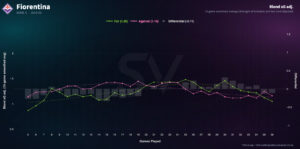
The expected goal differential swung from -0.18 to +0.39 per game, a shift of +0.57 units. The quality of construction and territorial dominance remained virtually unchanged across both periods — expected threat created 0.69 versus 0.72, field tilt 49 percent versus 51 percent.
As we can see in the blended xG and xGA chart, the shift between “conceding” and “creating” became clear after the coach’s arrival, with xGA dropping to very low levels.
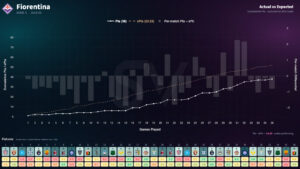
The projected points-per-game rate from December 21 onwards, extrapolated across a full season, would have placed Fiorentina eighth. The gap between actual points and expected points over Vanoli’s entire tenure stood at -8.15 units: the models indicated a team performing at the level of European contention being recorded, by the final table, as a side that had narrowly escaped the drop (as you can see in the chart on the right). In parallel, Fiorentina reached the quarterfinals of the UEFA Conference League before being eliminated by Crystal Palace.
Being Versatile
There is a line that Vanoli has repeated at almost every press conference in Florence: “I am not a fundamentalist about formations.” Across three Serie A campaigns as a head coach, the evolution has been legible and deliberate: at Venezia, direct attacking football with aggressive man-marking; at Torino, hypersynchronised pressing with codified build-up sequences; at Fiorentina, an attempted synthesis, then its deliberate abandonment. He has operated throughout in environments of maximum institutional instability — a contested ownership at Torino, a resigned sporting director and fractured dressing room at Fiorentina, the death of a president in the middle of a relegation fight.